Let’s be honest, thinking about what’s in your tap water can be a little unsettling. You turn on the faucet, and out comes… well, water. But what else is in there? Is it really as clean as it looks? If you’ve ever found yourself pondering the invisible ingredients in your drinking water, you’re not alone. And if you’ve started looking for answers, you’ve probably stumbled across the term “reverse osmosis.”
It sounds like something out of a high school science class, and, well, it kind of is. But don’t let the technical name fool you. Reverse osmosis is one of the most effective ways to get cleaner, safer water right from your tap. So, what does reverse osmosis remove? From chlorine to fluoride and more, we’re about to break down how RO systems can deliver purer water for your home.
What Is Reverse Osmosis and How Does It Work?
So, what is reverse osmosis? At its core, it’s a water purification process that uses a semipermeable membrane to separate water molecules from other, less desirable substances. Think of it like a super-selective bouncer at a club, but for your water. Only the purest water molecules get past the velvet rope.
Here’s how it works: your home’s water pressure is used to push water through this special membrane. The membrane is incredibly fine, with pores so small that they can block contaminants as tiny as a single atom. The result? The bad stuff gets flushed away, and you’re left with cleaner, better-tasting water.
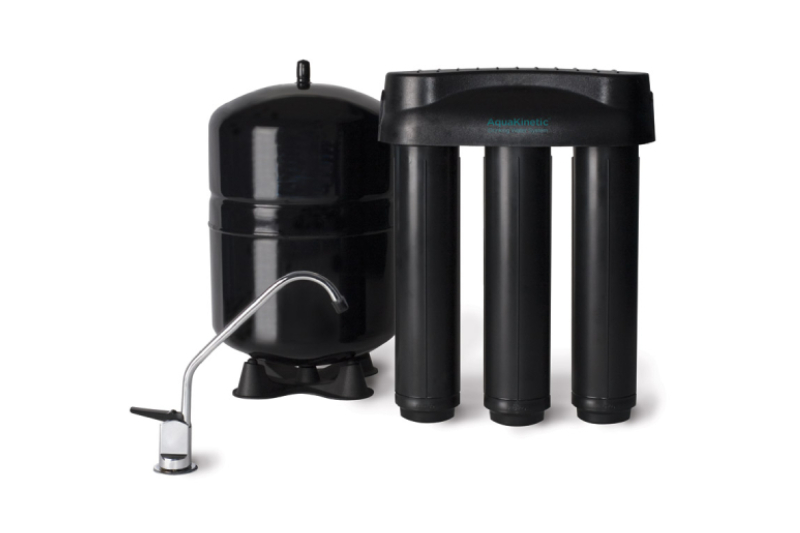
But a good reverse osmosis system is more than just a membrane. It’s a multi-stage process designed to tackle a wide range of water issues. Pre-filtration removes larger particles like sand and rust, while carbon filtration tackles chlorine and improves taste. The reverse osmosis stage removes up to 95% of total dissolved solids, and post-filtration provides final polishing. It’s this team approach that makes reverse osmosis so effective.
What Contaminants Does Reverse Osmosis Remove?
This is the big question, isn’t it? You want to know what exactly that fancy membrane is filtering out of your water. The short answer is: a lot. So, what contaminants does reverse osmosis remove?
RO systems excel at removing heavy metals like lead, arsenic, mercury, and cadmium. These contaminants can leach into water from old pipes and industrial runoff, posing serious health risks even at low levels. Fluoride removal is another strength, with systems removing 85-95% of fluoride for those who prefer it out of their drinking water.
Chlorine gets tackled by the carbon filter stage, improving both taste and removing a chemical many prefer not to drink. Nitrates from agricultural runoff, which can be particularly harmful to infants, are effectively removed. The system also handles pesticides, herbicides, and up to 99% of total dissolved solids.
Perhaps most impressively, the pores in an RO membrane are so small they can block bacteria, viruses, and other microorganisms. This is a huge benefit, especially for those with well water or anyone concerned about microbial contaminants.
Does Reverse Osmosis Remove Minerals?
Okay, let’s tackle the elephant in the room. You’ve probably heard the argument that reverse osmosis is too effective—that it strips everything out of the water, including the good stuff. So, does reverse osmosis remove minerals?
Yes, it does. The same process that removes harmful contaminants also removes beneficial minerals like calcium and magnesium. The membrane can’t tell the difference between a lead molecule and a calcium molecule. It just sees a dissolved solid and blocks it.
Now, this is where the debate usually starts. Is this a bad thing? The truth is, it’s complicated. We do need minerals like calcium and magnesium for our health, but the majority of these minerals come from the food we eat, not the water we drink. You’d have to drink a lot of water to get your daily dose of minerals.
Many modern RO systems now offer an optional remineralization stage. After purification, water passes through a special cartridge that adds a balanced blend of minerals back into the water. It’s the best of both worlds: you get the purity of reverse osmosis with the taste and benefits of mineral water.
What Does Reverse Osmosis Not Remove?
While reverse osmosis is a powerhouse, it’s not a magic wand. There are a few things that can slip through the cracks. So, what does reverse osmosis not remove?
Some dissolved gases, like hydrogen sulfide (which causes that rotten egg smell), can pass through an RO membrane because the molecules are just too small. However, many RO systems include a carbon filter that can help reduce these gases.
While RO is effective against many agricultural chemicals, some pesticides and volatile organic compounds (VOCs) can be tricky. Their effectiveness depends on the specific chemical and the quality of the RO system. This is another reason why a multi-stage system with a good carbon filter is so important.
The RO membrane itself isn’t great at removing chlorine, and high levels of chlorine can actually damage the membrane over time. That’s why a quality pre-filter is a must-have.
What to Look for in a Reverse Osmosis System
So you’re sold on the idea of reverse osmosis. You’re ready for cleaner, better-tasting water. But a quick search for RO systems can feel overwhelming. There are a lot of options out there, and they’re not all created equal.
Start with a water test. It’s the only way to know for sure what you’re dealing with. A professional water test will tell you exactly what contaminants are in your water and at what levels. This information is crucial for choosing a system tailored to your specific needs.
Look for multi-stage filtration. The best RO systems include a sediment pre-filter, a carbon filter, and a post-filter. Each stage has a specific job, and they work together to provide comprehensive filtration.
Check for certifications from third-party organizations like the NSF or WQA. These certifications mean the system has been rigorously tested to ensure it meets strict standards for contaminant reduction.
Consider modern features like smart systems that can track your water usage, monitor filter life, and alert you when it’s time for a replacement. Don’t forget about maintenance—look for systems with long-lasting filters and membranes.
Why Aqua Soft’s Kinetico RO Systems Get It Right
This is where Aqua Soft Water Systems comes in. As the authorized Kinetico dealer for Palm Beach and Broward County, we’ve seen it all when it comes to water problems. Kinetico’s whole house reverse osmosis systems are in a league of their own.
What makes Kinetico special? They’re smarter. Kinetico systems are non-electric, powered by the kinetic energy of moving water. No timers, no computers, no fuss. They’re incredibly efficient, regenerating only when needed, which saves money and reduces water waste. Plus, they come with a 10-year, 100% parts warranty.
But it’s not just about the technology. When you work with Aqua Soft, you’re getting a partner in your journey to better water. Our team of factory-trained technicians will test your water, recommend the right system for your needs, and provide expert installation. We’re here for you every step of the way, with after-hours service 365 days a year.
So, if you’re ready to stop worrying about what’s in your water and start enjoying the peace of mind that comes with a top-of-the-line reverse osmosis system, it’s time to take the next step. Contact us today for a free water analysis. Let us show you why Aqua Soft and Kinetico are the right choice for your home.